Most people appoint an architect once. So almost nobody knows what it's actually like — what we'll ask you, what you'll be shown, how a house you already own becomes a house you can't wait to get home to. Here's the whole thing, honestly.
It starts with your life, not your house
The first meeting surprises people. We barely look at the building. We want to know how you actually live: who cooks and whether they want company while they do it, where the post and the school bags and the dog end up, which room you avoid in February, what you'd do on a free Sunday if the house let you. Where the light lands at seven in the morning and at seven at night.
None of that is small talk. It's the brief. A house extension is one of the few purchases where you get to specify the thing itself rather than choose from a shelf, and the specification is your own life described accurately. Get that part right and the drawings almost fall out of it.
Then we give you something to argue with
Early sketches are not a reveal. They're a conversation opener, and the good ones provoke a reaction — including "absolutely not". We'll usually show you two or three genuinely different ideas, because the fastest way to find out what you want is to look at something you don't.
This is the part clients tell us they enjoyed most. You're not approving a product; you're in the room while the thing is being decided. You'll say something offhand about your grandmother's kitchen and watch it change the plan. Expect to change your mind twice and be right both times.
The moment it clicks
Every project has one. It's rarely the big glazed thing. Usually it's a single unglamorous move that reorganises everything around it — a doorway shifted a metre, a level dropped by three steps, a wall you assumed was load-bearing turning out not to be, a window put somewhere nobody would think to put a window.
On one Roundhay project it was accepting that the grand front rooms should stay grand and formal, and putting all the family life at the back, in the garden, in glass. Suddenly the Victorian house stopped fighting the family living in it. That move took an afternoon to find and five years of practice to see.
Drawings precise enough to be priced honestly
Then comes the unglamorous craft: a set of drawings so specific that several builders can price the same building rather than three different guesses at it. We tender your finished design, compare the returns line by line, and tell you what's actually driving the difference.
This is where an architect frequently pays for themselves. Competition does what competition does, and precision is what makes competition possible. One number from one company, however professional, has never been tested against anything.
Somebody on your side while it's built
We don't hand over a folder and wish you luck. As contract administrator we run a proper building contract between you and your builder, all the way through. In practice that means:
- Payments certified against work actually done, to the standard drawn — not against an invoice schedule.
- Inspections at the stages that matter, including the details about to be buried in the ground or covered up forever.
- Changes priced before they happen, so the budget moves by your decision rather than by drift.
- Retention held until defects are put right — remarkable for how quickly defects get put right.
- An independent referee between you and the builder, obliged to administer the contract fairly, which is why our projects rarely turn sour.
Most people don't know this part of the job exists until they've benefited from it. It's the difference between hoping a build goes well and having someone whose job it is to make sure it does.
What it costs, and what it's worth
Architects' fees are a percentage of construction cost, and they buy three things that are hard to buy separately: a design that could only be for your household, a tender that finds the honest price, and an advocate for the whole build. On a bespoke project the tender alone often recovers a good part of the fee. The rest of it you feel every morning for twenty years.
And if you've had a design-and-build quote
Plenty of people come to us holding one, and we won't be precious about it. Design and build has real strengths: one contract, one point of contact, a price early, and a process built for speed. For a straightforward project where the outcome is a known quantity, it can be exactly the right tool, and we'll say so in a first meeting.
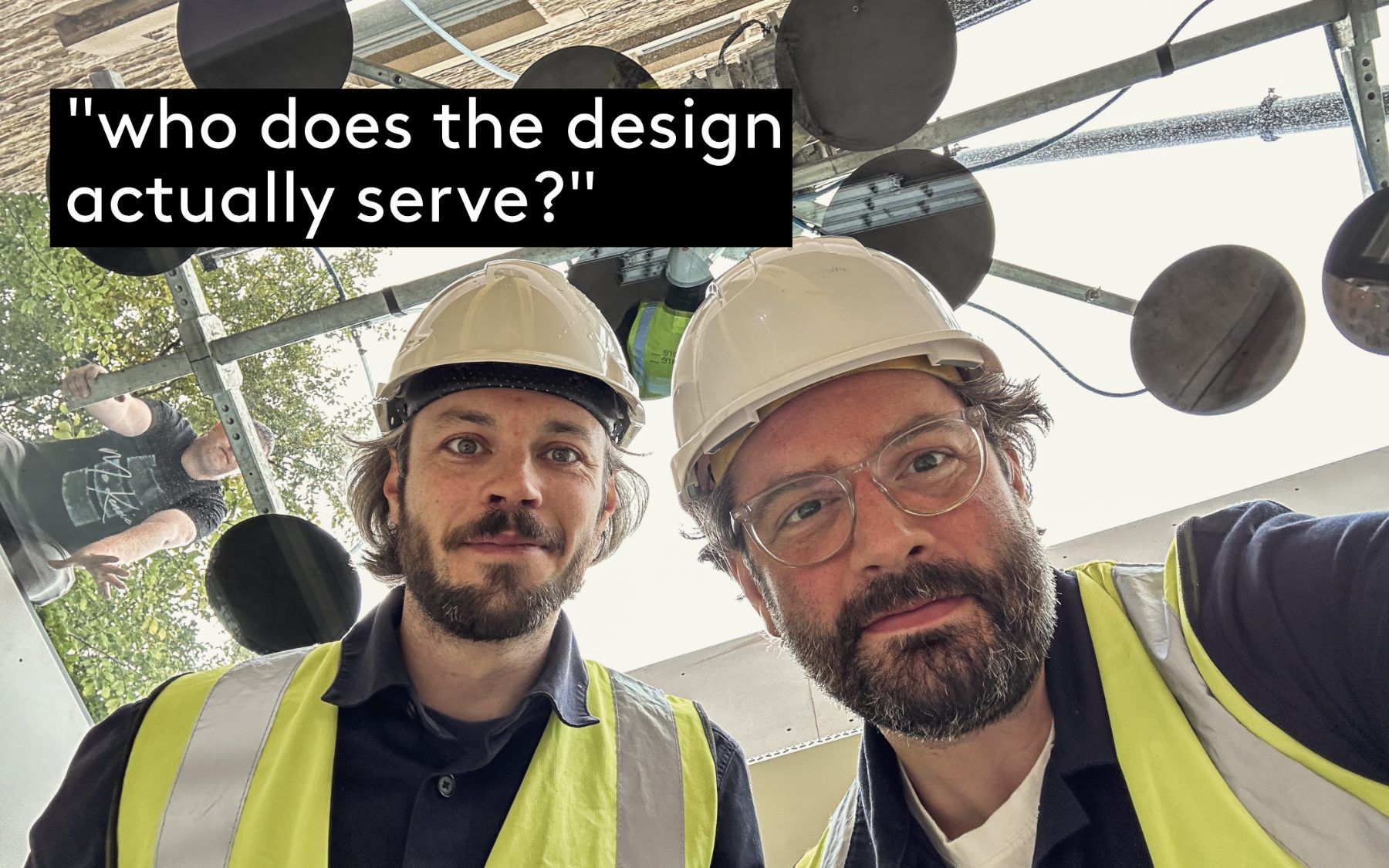
The difference worth understanding is structural rather than moral: in a design-and-build package, the designer works for the builder. Decisions drift towards what's fastest and cheapest to construct, because that's where the margin lives. An independent architect works for you — our fee doesn't grow when the spec is cut, and our reputation lives in the finished building rather than the build programme. Ask yourself the simple version: who does the design actually serve?
If you're thinking about it
The best time to talk to an architect is earlier than you think — before the loft conversion you've half-decided on, before the builder's sketch, while the question is still "what could this house be?" rather than "how much for that?". First conversations are free, and we'd rather tell you the honest answer than win the wrong project.
Frequently asked questions
What actually happens when you work with an architect?
It starts with a long conversation about how you live rather than about the building. From that brief we develop two or three genuinely different design ideas for you to react to, refine the one that's right, get it through planning, and produce drawings detailed enough for several builders to price the same building. Then we administer the building contract through construction, so somebody independent is looking after the design and the budget until the last defect is signed off.
What is contract administration, and why does it matter?
It's the architect running a formal building contract between you and your builder during construction: certifying payments against work actually done, inspecting the key stages, pricing changes before they happen, holding retention until defects are fixed, and acting as an independent referee. Under a turnkey contract all of those functions are performed by the company being paid.
When should I first talk to an architect?
Earlier than most people do — while you're still asking what the house could be, rather than pricing a solution you've already chosen. The cheapest changes are the ones made on paper, and the biggest gains usually come from questioning the plan you arrived with. A first conversation costs nothing.
Curious what your house could do? See how our process works, try the fee calculator, or start a conversation.