The best-specified homes we work on aren't chasing energy bills. They're chasing comfort. Sustainability, done properly, is simply what luxury feels like now: silent warmth, perfect air, and a house that will still be the best on the street in 2050.
There's a persistent idea that "eco" means compromise: smaller windows, visible kit, worthy beige. In a well-designed extension the opposite is true. The technologies below are invisible in the finished architecture, and what they deliver is precisely what premium clients ask us for in other words: rooms that hold an even temperature all year, air that's always fresh, and running costs that don't flinch when energy prices do.
the envelope: comfort you can feel but never see
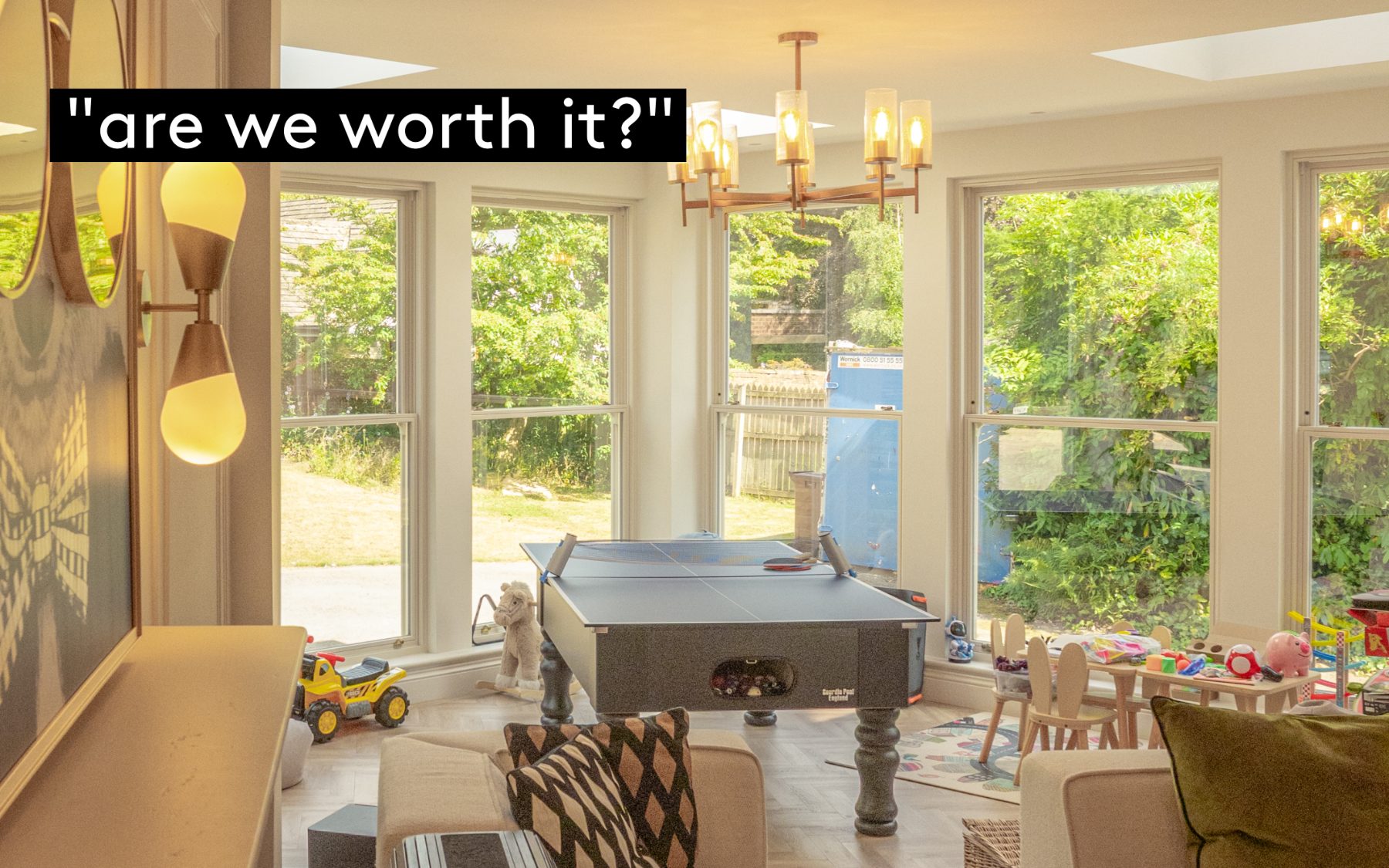
Everything starts with the building fabric. A high-thermal-efficiency envelope (continuous insulation without cold bridges, genuinely airtight construction, and glazing specified for performance rather than just size) changes how a room feels in ways that are hard to convey until you stand in one. No cold spot near the glass in January. No radiator roar. Surfaces that are the same temperature as the air. In a glazed garden extension this matters doubly: generous glass and all-year comfort only coexist when the envelope is engineered, which is why fabric is a design decision from the first sketch, not a spec upgrade at the end.
mvhr: the luxury nobody can point to
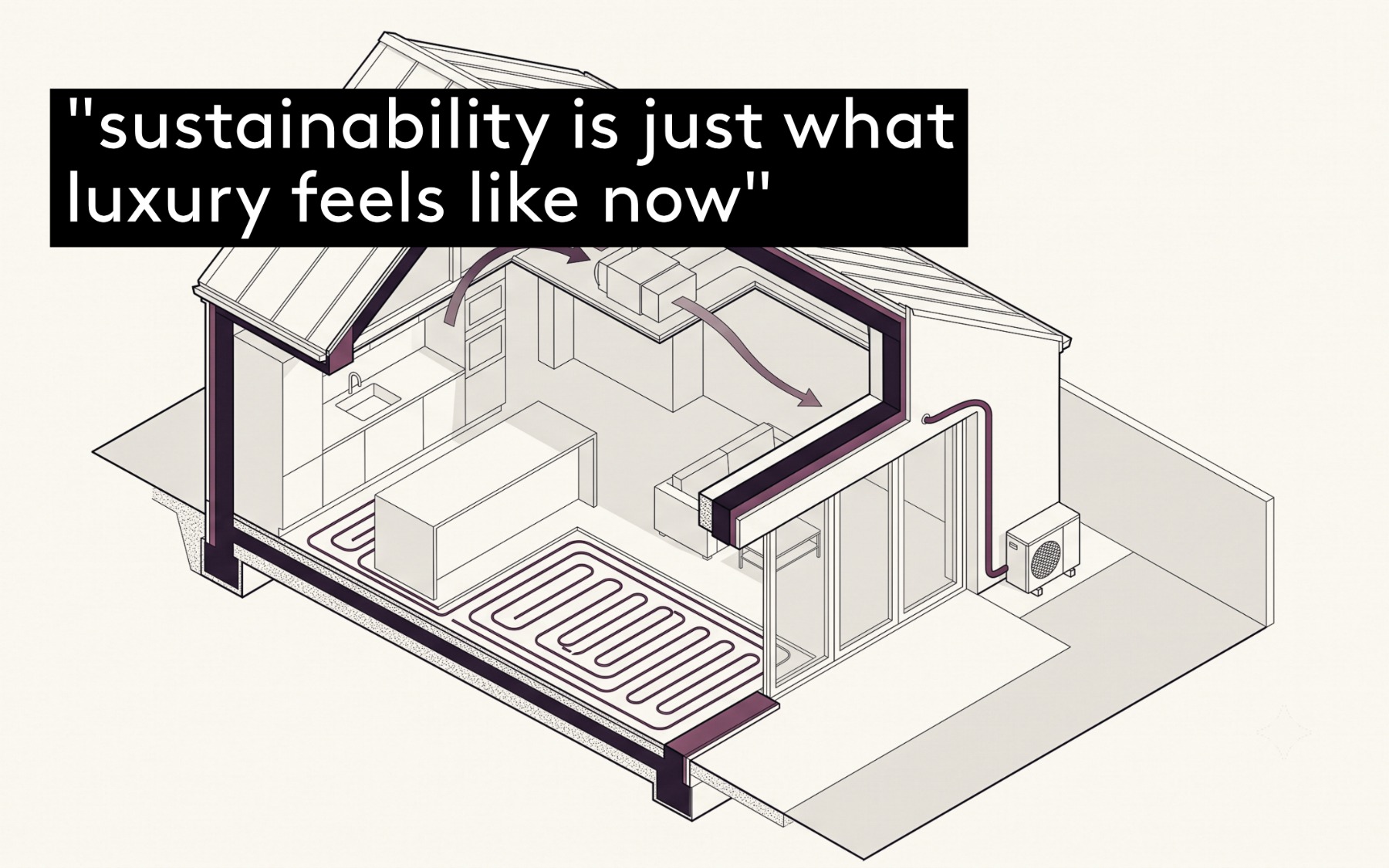
Mechanical Ventilation with Heat Recovery is the least glamorous acronym in construction and, we'd argue, the biggest single upgrade to how a home feels. A quiet system continuously extracts stale, humid air from kitchens and bathrooms and supplies filtered fresh air to living spaces, recovering the heat from the outgoing air as it goes. The lived experience:
- Fresh air in every room, permanently, with the windows shut, and filtered, which hay fever sufferers notice within days.
- No condensation, no lingering cooking smells, no stuffy morning bedrooms.
- Near-silent operation, with the heat you've paid for kept in the house.
Guests won't be able to say why the house feels so good. That's rather the point.
heating without a boiler
An air-source heat pump paired with underfloor heating suits an architectural extension unusually well. Underfloor heating removes radiators from the walls, which, in a room composed around glazing and clean lines, is an aesthetic gift as much as a technical one, and its low running temperature is exactly what heat pumps do best. The result is gentle, even warmth from the floor up, a plant cupboard instead of a boiler, and a heating system already on the right side of where regulation and energy prices are heading.
automation that stays out of the way
Smart home technology earns its place in an extension when it's designed in rather than bolted on. Lighting scenes that move the room from breakfast to dinner to late evening on one press. Blinds that shade the glazing automatically on hot afternoons: solar control that thinks for itself. Heating that learns the household's rhythm and warms the yoga room for 6am without heating the whole house. Wired properly at first fix, none of this is visible; it's simply a house that anticipates.
The prestige point: in the premium market, specification is the new square footage. "EPC A, MVHR, heat pump, triple glazed" is becoming what "south-facing garden" used to be: shorthand that a house is the real thing. A future buyer of your home in 2035 will expect this as standard; building it now means your extension never becomes the dated one.
designed in, not added on
The common thread: every one of these systems works brilliantly when it's part of the architecture from day one, and poorly when it's retrofitted around a finished design. Duct runs need ceiling zones. Heat pumps need a considered position (they're quiet now, but placement is still design). Airtightness is won or lost in junction details drawn months before anyone is on site. This is precisely the kind of coordination an architect-led project is built for: one team designing the space, the fabric and the systems as a single thing.
Want an extension that's as comfortable in 2050 as the day it's finished? Let's talk about future-proofing your home. We'll tell you honestly which of these your project needs, and which it doesn't.